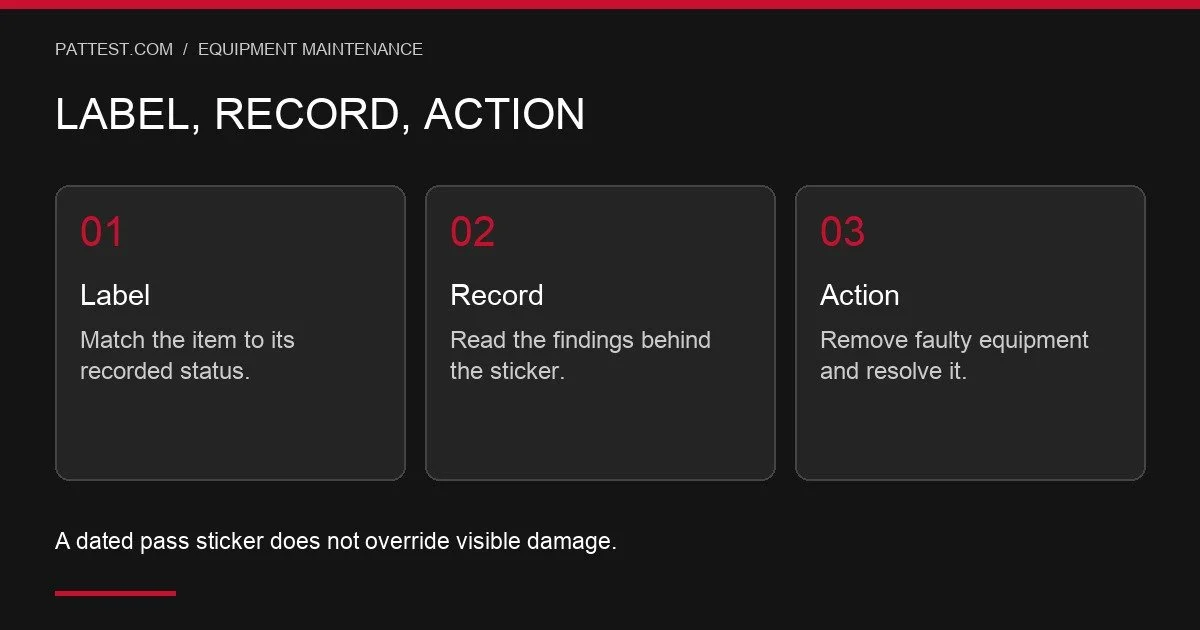
PAT testing stickers are optional management aids: HSE says equipment need not be labelled and records need not be kept. A pass records an outcome on a date, not present safety; it is not the report, often a PDF certificate. Decode the label, match its record and keep checking.
PASS
PASS means the item met the applicable inspection and testing criteria for the recorded work, not that every possible electrical or mechanical fault was excluded; HSE says visual examination is essential because testing alone misses electrical safety defects. Distinguish inspection from combined inspection and testing, and use words alongside colour: green for a pass and red for a failure are conventions, not mandated colours. Explain your scheme to staff; green labels do not show whether faults were resolved or damaged items withdrawn.
FAIL
FAIL means unmet criteria: give staff a DO NOT USE instruction and physically prevent use, not merely apply a red sticker; HSE says damaged or faulty equipment should be recognised and removed from use without delay, including a failed kettle whose replacement has not arrived. Disconnect the item where safe, identify it and move it to a controlled quarantine area, notify its owner, and record the asset number, fault, destination and who arranges the next step; HSE's routes are competent repair or disposal preventing reuse, not improvised repairs or transfer with unclear status. Agree the repairer's return-to-service confirmation and necessary checks; HSG107 identifies repair or modification as grounds for combined inspection and testing, and the failure and resolution history must survive relabelling.
NOT TESTED
NOT TESTED is an administrative description, not a pass: request the reason — unavailable, inaccessible or needing different assessment — and resolve ambiguity before handover. Record agreed visual-inspection-only arrangements distinctly from missed appointments: HSE says some low-risk equipment needs user checks and visual inspection rather than a PAT test.
The date
INDG236 suggests recording the result and date of the test: use the actual inspection or test date, not merely the year; a three-year-old pass cannot reveal yesterday's trapped cable, cracked casing or unsuitable storage, because HSE says testing shows condition only then and promises no further safe period. Age creates no statutory expiry: HSE bases frequency on equipment type and environment, not universal annual testing; compare the maintenance plan and actual condition, withdrawing damage despite recent labels and investigating overdue inspections despite tidy appearances. HSG107 says omit next-test-due dates: the dutyholder, not the person testing, decides risk-assessed intervals; keep the schedule in the maintenance system, responsive to changed use — see the annual-testing distinction.
The asset ID
Match the asset ID to the equipment register and report: OFFICE-014 distinguishes identical monitors better than room names once items move; keep IDs stable and verify records before recreating a damaged label's date or result. Name who maintains the records for shared monitors, chargers and extension leads and who receives fault reports, rather than trusting previous users; HSE recommends disconnected checks before most equipment is used, and HSG107 treats non-dedicated leads individually where appropriate, so detachable leads retain maintenance when moved. Loan issue-and-return records should identify asset, borrower, damage, faulty-item destination and reporting route.
The tester
Name the tester or company for follow-up: these identification fields are recommendations, not prescribed label contents; ask when booking PAT testing how reports link asset ID, description, location, inspection outcome, applicable tests and readings, and reasons for exclusion or limitations to equipment. A visit-only certificate identifies neither passes, failures nor unassessed items; PDF format adds no assurance, and testing scope matters more than paperwork names. HSE says labels and records help demonstrate, monitor and review maintenance; check insurance, client and audit terms, clarify requested evidence and specify arrangements in the brief, distinguishing contract conditions from statutory rules.
Items with no label
No readable label means resolve uncertainty, not guess a pass or copy a similar item's sticker: identify the register entry, confirm recorded condition and decide further assessment. A functioning system need not label every appliance: HSE's FAQ confirms no legal requirement to label inspected or tested equipment or keep records of those activities, checked against published guidance in November 2026; the fault, not the sticker, determines withdrawal, and HSE says remove faulty equipment without delay, then repair competently or dispose of it to prevent reuse.
From Kettering, PatTest.com provides PAT testing for businesses, landlords and premises managers across Northamptonshire, Leicestershire, Warwickshire, Bedfordshire, Buckinghamshire and the wider Midlands.