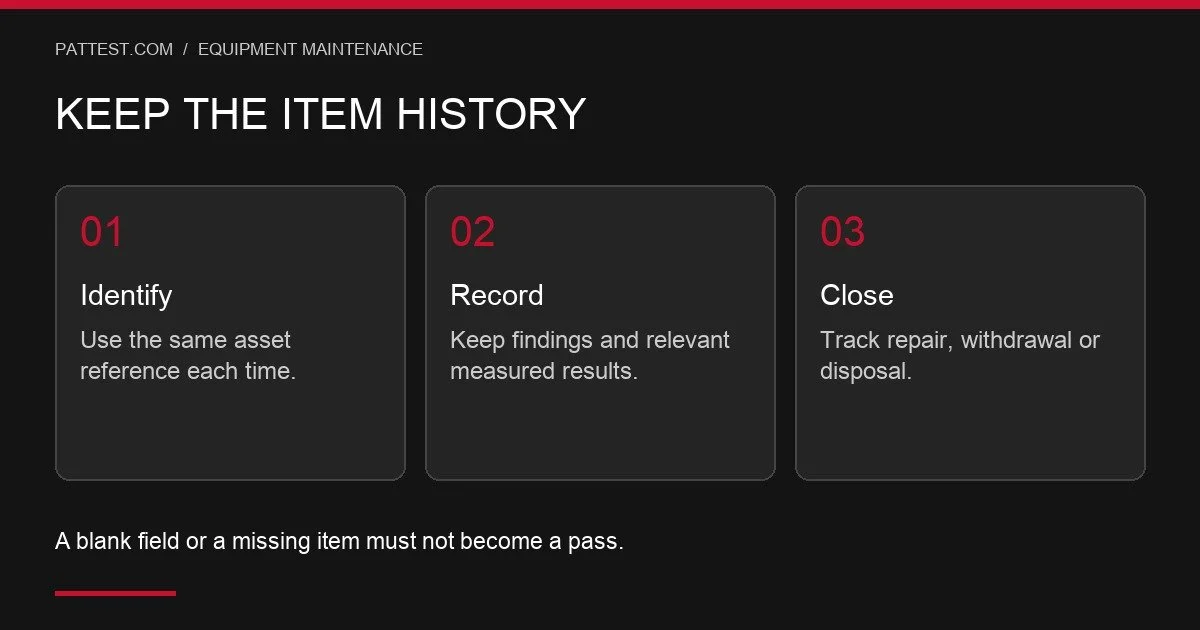
A PAT testing record sheet identifies each item, records what was checked and follows failures to a conclusion. It is a management tool, not a prescribed form: HSE says PAT records and labels are not legally required, but records help demonstrate a maintenance scheme and whether it works. Copy the blank fields below, using one row per inspection event; retain earlier results and make current status easy to find.
Client, site and scope
- Client/contract reference: __________
- Site/building/rooms covered: __________
- Visit scope and activities covered: __________
- Exclusions/inaccessible items: __________
- Visit date/report reference: __________
Tester and instrument
- Inspector name/traceable identifier: __________
- Instrument model/serial number: __________
- Calibration reference/status, where used: __________
- Test settings affecting interpretation: __________
Item identity, location and class
- Unique, persistent asset ID: __________
- Location/custodian, including moves: __________
- Equipment type/make/model: __________
- Serial number, where available: __________
- Construction class, from markings/relevant information: __________
- Actual inspection date: __________
- Activity: user check/formal visual/combined inspection and test: __________
Visual findings and readings
- Plug/fuse/cable/grip/casing/other relevant features: __________
- Defects and limitations: __________
- Applicable tests/settings/measured values/units: __________
- Anything not tested, with reason: __________
Outcome and follow-up
- Pass/fail/clearly defined status, such as awaiting assessment: __________
- Remedial action/person/date/repair or replacement reference: __________
- Dutyholder-approved next action date or review trigger: __________
- Interval basis, recorded separately: __________
- Closure: safe return/disposal/permanent withdrawal evidence: __________
Notes on the fields
These fields are recommended, not legally prescribed. HSE distinguishes user checks, formal visual inspection and combined inspection and testing; record which happened, because looking over a cable is not an electrical test. Tie every report to a site, date and person.
Identity, not just a sticker. Use the stable asset ID on reports, defect notifications and repair records; the instrument manufacturer's practical guide recommends unique codes cross-referenced to inspection/test details. Serial numbers help distinguish identical appliances moving between rooms; establish class from markings and information, not the plug. Our guide to why PAT testing is not a legal annual requirement explains why neither an annual sticker nor a spreadsheet proves unsafe equipment was dealt with.
What a pass means. A sticker alone omits visual findings, measurements, limitations, action and whether a lead was replaced afterwards. INDG236 rev3, published in 2013, says a result indicates safety at testing, not continued safety for a further period; never let a sticker override a visible fault.
Readings and scope. A bare “0.2” is ambiguous: retain units, relevant settings and the contractor's original report, not just its outcome. HSG107 warns different instruments can explain changed readings rather than deterioration; traceable instrument details let the next competent person interpret history. The industry guide recommends identification, location, description, serial number and periods between tests; action and closure fields make that register usable afterwards.
Say why something is not applicable: “No instrument used — formal visual inspection only” beats an empty results cell; “Not inspected — locked room” is not a pass. Inaccessible appliances and moulded plugs must not acquire invented internal findings. Our guide to what PAT testing tests explains the checks; when arranging PAT testing, request an itemised report and agree identification of inaccessible, failed and missing items.
User checks. Tell users what to look for, how to report defects and who removes suspect equipment. The practical guide says routine checks need recording only if a problem is found; a consistently used shared-equipment tick-sheet is optional, not legally required.
Inspection competence. Formal visual inspectors need sufficient knowledge and training, but need not be electricians in many low-risk settings. Combined testing needs greater knowledge and experience, suitable equipment and understanding of results; an automatic pass does not explain a wrongly selected sequence. Keep visual findings alongside measurements and the overall decision.
Future dates. Keep these in the maintenance schedule, not on the pass label: HSG107 advises against a next-test-due label date and assigns risk-based intervals to the dutyholder. These are management decisions, not tester-created expiry dates.
Failure closure
HSE says damaged or faulty equipment should be removed without delay, then competently repaired or disposed of to prevent use. The following is a recommended workflow, not a prescribed status or label colour.
- Identify: asset ID, location, date and reporter.
- Describe: “cable sheath pulled out of plug grip”, not “bad cable”; attach a photograph if useful.
- Prevent use: disconnect safely, mark clearly, quarantine under controlled custody.
- Assign: name the person arranging competent repair, replacement or disposal and a follow-up date.
- Close: retain repair and appropriate inspection/test evidence before authorising return, or record disposal/permanent withdrawal.
A kettle awaiting lead repair stays “failed — quarantined”, retaining its earlier pass; ordering a lead is not passing. Record actual repair and subsequent assessment separately. Give a replacement appliance its own ID linked to the withdrawn item, rather than making two appliances appear one history.
Retention and retrieval
HSE sets no fixed ordinary-PAT retention period: keeping records is not itself compulsory. Avoid universal five-year or seven-year rules; document a policy reflecting equipment life, trend review and contracts. Practically, keep working history during service, decide retention after disposal, keep repair evidence alongside inspections, back up readable exports and ensure retrieval during the premises manager's absence.
Insurer/auditor terms vary: read the policy, contract or specification before claiming annual tests, a particular certificate or retention period is required. For tenant enquiries, check the supplied property's asset IDs, dates, exclusions and unresolved defects; share relevant information, not other occupiers' whole-building records. This is document handling, not a universal tenancy reporting duty.
HSE says logs reveal unusual wear by equipment/location and trends requiring remedial action; filing them without changing maintenance misses that purpose.
From Kettering, PatTest.com provides PAT testing for landlords, duty holders and premises managers throughout Northamptonshire, Leicestershire, Warwickshire, Bedfordshire, Buckinghamshire and the wider Midlands.