
UK Electrical & Fire Safety Round-up — 14 November 2026
E-bike conversion kits lead this week's safety news: OPSS published guidance on 11 November explaining suppliers' existing responsibilities, while a council reported a prosecution involving unsafe kits. Three new electrical product notices also identify plug and battery hazards. For landlords and premises managers, the priorities are to check equipment identities, review charging arrangements and keep PAT testing and fire precautions working together.
Electrical safety
E-bike conversion kits: clearer expectations for suppliers
11 November — new OPSS guidance. The Office for Product Safety and Standards says its guidance explains existing product safety law rather than creating new legal obligations. It covers conversion kits containing an electric motor, whether or not a battery or charger is included.
OPSS expects clear instructions covering installation, suitable bicycles, compatible batteries and chargers, and safe charging. It points to evidence that mismatched batteries and chargers are more likely to fail when used together, potentially causing an explosion or fire.
Who it affects and what to do: suppliers and repair businesses should review their instructions and safety documentation; landlords and employers providing charging space should ask users to check that their kit, battery and charger are a manufacturer-recommended combination. Include charging arrangements in your fire risk assessment, particularly where bikes are kept near an escape route.
Conversion-kit prosecution: distinguish the fine from the court bill
10 November — council announcement about a 6 October hearing. Tower Hamlets Council reported that an east London retailer pleaded guilty at Thames Magistrates' Court to two offences involving 18 unsafe e-bike conversion kits. The council's headline describes an £8,000 fine, but its detailed account records a £4,500 company fine, plus a £1,800 surcharge and £2,060 in costs.
The council said there was no advice identifying compatible batteries, creating a risk that unsuitable batteries could be used. It also reported that two cases involving other businesses were pending; those are not convictions.
Who it affects and what to do: retailers should not treat missing compatibility information as a minor paperwork issue. Buyers should request clear battery and charger specifications before purchase, rather than choosing replacements simply because the connectors fit.
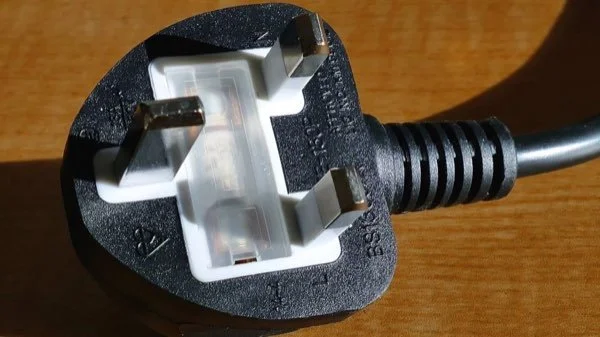
Three new product safety notices for your PAT testing register
All three notices below were published on 12 November. They record rejected imports, not three end-user recall programmes. Match the model details against equipment and purchasing records before deciding whether a notice applies.
Zolt Universal Power Adaptor Plug, model EA024VMXAAXX-1102, sold via Amazon — notice 2611-0052. OPSS rates the fire risk as high: the live pin is too narrow, potentially causing a poor connection, excessive resistance and localised overheating. The import was rejected and Amazon removed the listing. Action: OPSS tells owners to stop using it immediately and contact the retailer or supplier for a replacement or refund.
Palitix Smart Wi-Fi RGB LED Lighting Strip, sold via Amazon — notice 2611-0050. The 10-metre kit is identified by plug model QZT-2401500 and adaptor model QZT-2403500. OPSS rates the electric-shock risk as high because the plug pins are too close to the edge, potentially leaving a live pin accessible during insertion or removal. The import was rejected at the border. Action: if your equipment matches, take it out of use and contact the supplier about the notice; do not try to modify the plug yourself.
Cordless pruning saw, model 10C6M, batch 05-2026, sold via Amazon — notice 2611-0056. Charger model XH2100-1670WE and battery model T1820-5 identify the affected combination. OPSS rates the fire risk as serious because poor internal battery connections could cause a short circuit, overheating and ignition. The import was rejected at the border. Action: grounds-maintenance teams and premises managers should check tool stores, stop using or charging a matching item and ask the supplier for advice.
Portable appliance testing is not a substitute for acting on a safety notice. HSE's standing guidance explains that visual examination is essential because testing alone cannot detect every electrical safety defect. Use your PAT testing records to identify affected equipment, but do not assume a previous pass overrides a regulator's warning. Our guide to what PAT testing checks explains the inspection and testing process.

Fire safety
Hotel evacuation in Wembley: cause still under investigation
9 November incident; LFB update 10 November. London Fire Brigade reported a fire on the fourth floor of a 15-storey hotel on Empire Way, Wembley. Around 280 people were evacuated by hotel staff before firefighters arrived, and one person was taken to hospital after treatment for smoke inhalation. LFB said the cause was under investigation; it has not confirmed an electrical cause.
Who it affects and what to do: managers of hotels and other sleeping accommodation should use this as a prompt to review staff evacuation training, arrangements for guests needing assistance and outstanding alarm faults. Check that fire alarm servicing is current and that staff know the building's agreed evacuation procedure. This is a precautionary recommendation, not a finding that the hotel's precautions failed.
Shop fire beneath flats in Holloway
11 November — incident and LFB update. Four fire engines and around 25 firefighters attended a shop with flats above on Holloway Road. Part of the ground-floor shop was destroyed, and five people left before the Brigade arrived. LFB said the cause was under investigation.
Who it affects and what to do: owners and managers of mixed-use buildings should review how the commercial and residential parts interact. Check shared escape routes and arrange a competent review if alterations may have affected fire separation. Do not infer an electrical fault or a compliance breach from an incident whose cause remains unconfirmed.
What to do this week
- Match equipment, not just brand names. Check the three notices against model numbers, batteries, chargers and purchase records; isolate matching products and record the action taken.
- Review e-bike charging. London Fire Brigade's standing advice warns that damaged, faulty or incorrectly charged lithium-ion batteries can cause rapidly spreading fires. Check manufacturer instructions and keep charging away from communal escape routes; include the arrangements in your HMO compliance review.
- Keep PAT testing risk-based. Review appliance condition, use and environment rather than assuming every item needs the same test interval; HSE says inspection and testing needs depend on the equipment and its surroundings. Landlords can use our guide to PAT testing for landlords to organise records.
- Close out fire-protection faults. Review fire alarm servicing, fire extinguisher servicing and emergency lighting testing records, and assign outstanding repairs to a named person. Government workplace guidance calls for regular checks of alarms, emergency lighting, escape routes and fire doors, with faults recorded.
- Keep EICR and appliance records separate. Check the fixed-installation inspection date as well as the portable-equipment register; one should not be treated as a replacement for the other.
For PAT testing, fire alarm servicing, fire extinguisher servicing, emergency lighting testing and fire risk assessments across Northamptonshire, Leicestershire, Warwickshire, Bedfordshire and Buckinghamshire, book a visit or view our prices.
