This week at a glance
Four electrical safety notices published between 4 and 6 November all fail at the plug or the cable rather than in the appliance: missing fuses, undersized pins, undersized cord. Two carry a serious or high fire risk. A fire in a convenience store with flats above was caused by a fault in the building's electrical intake — fixed wiring, which PAT testing does not cover. London Fire Brigade had its busiest Bonfire Night since 2016, and more than 30 tonnes of fireworks were seized in West Yorkshire. A Leeds property management company was fined £153,000 over a defective fire alarm system and the wrong evacuation signage.
Electrical safety
Four recalls and safety notices to check against your appliance register
OPSS published a run of electrical notices this week. Four are directly relevant to anyone who tests, supplies or uses portable appliances.
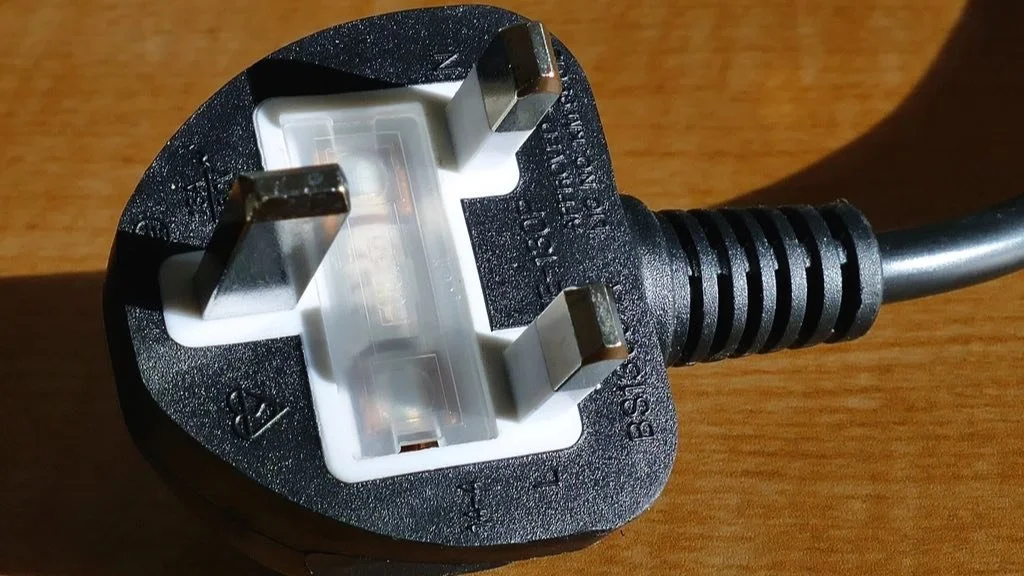
2200W vertical steam iron, model 8016, sold via eBay (notice 2610-0199, 4 November). The plug has no fuse and its pins are smaller than BS 1363 requires. OPSS rates the fire risk as high: without a fuse, the plug can overheat or explode under fault conditions. eBay has removed the listing. The product does not meet the Electrical Equipment (Safety) Regulations 2016 or the Plugs and Sockets (Safety) Regulations 1994. What to do: stop using it and contact the retailer or supplier for a replacement or refund.[1]
LEDSone UK Ltd AC-DC 12V 5A power supply adaptor, model CJ-1205 (2610-0165, 4 November). Serious fire risk. The plug has no fuse link, the live and neutral pins are narrower than permitted, the ISOD pin is shorter than permitted, and the plug fails the insulation requirements. It was also supplied without the required instructions or safety information. LEDSone UK Limited has withdrawn it from the market. What to do: stop using it. If you hold stock, check the model number and ask your supplier for a replacement or refund.[2]
GEARLASSO vehicle battery charger, model 10006902, sold via Amazon (2610-0131, 4 November). Serious fire risk from excessive resistance in the supply cord, which can overheat. The plug also fails BS 1363 on marking and dimensions and has no fuse. The import was rejected at the border, so later stock may never have reached buyers. What to do: if you already own one, check the model and SKU and stop using it if affected.[3]
1000W bagless cylinder vacuum cleaner, model XY-1008, sold via eBay between 23 October 2024 and 31 January 2025 (2610-0246, 6 November). Fire risk: the supply cord's cross-sectional area is 0.454 mm² against a required minimum of 0.75 mm². Undersized cords overheat in normal use. This is a full recall from end users, and affected customers have been contacted directly by the seller. What to do: stop using it and contact the seller for a refund.[4]
Two cordless tools were also rejected at the border on 6 November. A VTEK reciprocating saw, model V716, has a plug with no fuse and a plug face that does not meet BS 1363, with live and neutral pins positioned close enough to the edge to expose live parts; OPSS rates it high risk for fire and electric shock.[5] A cordless drill has a power supply that failed electrical isolation testing, allowing mains voltage to become accessible at the DC output, plus a plug that fails BS 1363 dimensions; it is rated serious risk for shock and fire.[6]
What this week means for your PAT testing programme
This is the clearest argument of the year for checking the plug, not just the appliance. A PAT test that only checks continuity and insulation can pass an appliance whose plug has no fuse: the fuse, the pin dimensions and the cord rating are separate checks. Our guide to non-sleeved plugs explains why the pin sleeve matters; the same reasoning applies to fuse links and cord size.
All four recalls came through online marketplaces, which is where non-compliant electrical goods concentrate. If you have bought chargers or small appliances online, our piece on fake phone chargers sets out what to look for.
If you are a landlord or an employer, a recalled appliance in a property you control is a defect you are expected to act on, not just the manufacturer's problem. A risk-based PAT testing programme — portable appliance testing, done properly — starts with an appliance register, so a recall notice can be matched against what you actually have rather than what you think you have.
A certificate is not proof of safety
In late October, HSE prosecuted an electrical contractor after it issued certificates declaring two car wash installations safe when they were not. HSE's specialist electrical inspector found that the certificate details did not match what was installed, and a follow-up visit found both installations still dangerous. The contractor was a member of the NICEIC scheme at the time and had generated the certificates through the scheme's members' system. It was fined £20,000 and ordered to pay £15,239 in costs.[7]
Who it affects: anyone who commissions electrical work and relies on a certificate — landlords, facilities managers and business owners. What to do: check that the certifying body's registration is current, and check that the certificate's details match the installation in front of you. A certificate records someone's judgement; it does not replace your own check.
Fire safety

Bonfire Night: record call volumes and a 30-tonne fireworks seizure
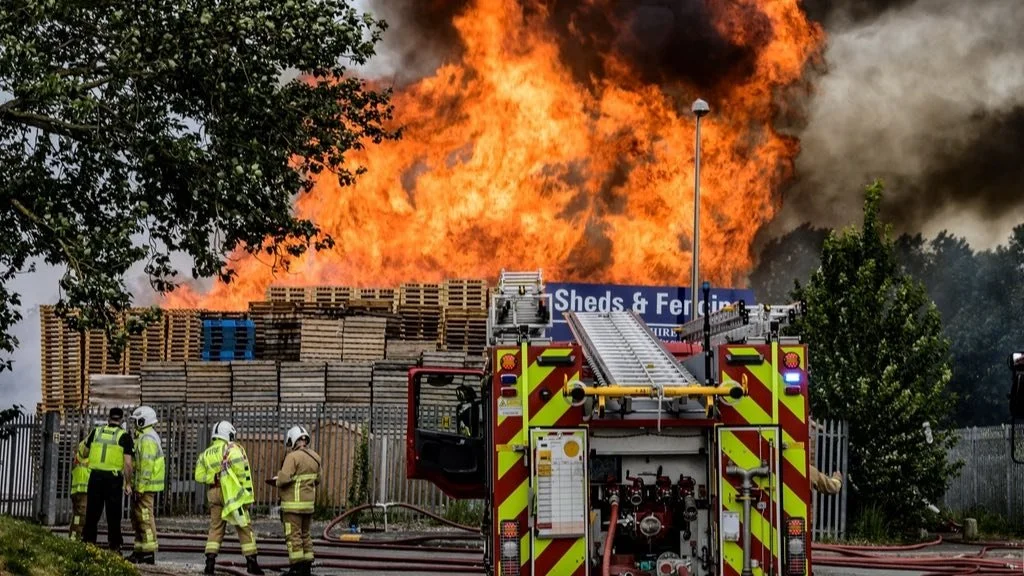
London Fire Brigade took 832 emergency calls on 5 November, its highest Bonfire Night figure since 2016 and one more than last year.[8] In West Yorkshire, the service reported 394 bonfire-related 999 calls and 155 incidents on 5 November last year.[14] This year, more than 30 tonnes of fireworks — with an explosive content of more than 5.5 tonnes — were seized from premises in Bradford and Calderdale after an inspection in October. A closure order on a Bradford retailer's premises has been extended to 12 November, and enquiries are ongoing.[13]
Who it affects: households, and any business that stores or sells fireworks. What to do: buy from a licensed retailer, check the CE or UKCA mark, store fireworks in a closed box away from ignition sources, and attend an organised display where you can. For Diwali, treat candles and diyas as naked flames: never leave them unattended, keep them in heat-resistant holders on a stable surface, and consider LED alternatives.[8]
Shop fire with flats above: fault in the electrical intake
PatTest.com provides PAT testing, fire alarm servicing, fire extinguisher servicing, emergency lighting testing and fire risk assessments across Northamptonshire, Leicestershire, Warwickshire, Bedfordshire, Buckinghamshire and the wider Midlands. If this week's recalls have prompted a review of your appliance register, book a visit or check our prices.