
The short answer
There is no single legal HMO compliance calendar. The law fixes a few intervals and leaves the rest to risk assessment. Gas appliances must be checked for safety every 12 months, the electrical installation at intervals of no more than five years, smoke and carbon monoxide alarms must be fitted and kept in working order, and an HMO licence can run for no more than five years. Fire alarm testing, emergency lighting, extinguisher servicing and portable appliance testing come from British Standards and official guidance, not statute. A calendar that treats all of them as law will over-test some things, under-test others, and bury the dates that actually carry legal weight.
The dates the law fixes
Gas. Regulation 36 of the Gas Safety (Installation and Use) Regulations 1998 requires the landlord to ensure each appliance and flue is checked for safety "within 12 months of being installed and at intervals of not more than 12 months", with a record kept. For a licensed HMO there is a second obligation: the licence conditions require the holder to produce to the local housing authority, annually, a gas safety certificate obtained within the last 12 months.
Electrical installation. In England, the Electrical Safety Standards in the Private Rented Sector (England) Regulations 2020 require the installation to be inspected and tested by a qualified person at "intervals of no more than 5 years", and before a new tenancy begins. Where the report calls for remedial work, it must be completed within 28 days, or sooner if the report specifies. It covers the fixed installation, not the appliances plugged into it; appliances are covered by the licence conditions and the housing health and safety rating system.
Alarms. The Smoke and Carbon Monoxide Alarm (England) Regulations 2015 require a smoke alarm on each storey with a room used as living accommodation, and a carbon monoxide alarm in any room containing a fixed combustion appliance other than a gas cooker. The landlord must check that each alarm works on the day a new tenancy begins, and repair or replace one that a tenant reports as faulty. Those Regulations exclude HMOs that require a licence; in a licensed HMO the licence conditions require a smoke alarm on each storey and a carbon monoxide alarm in any room with a fixed combustion appliance other than a gas cooker, kept in proper working order.
The licence itself. A licence cannot run beyond five years from grant. The mandatory conditions also require electrical appliances and furniture to be kept in a safe condition.
Fire safety. The Regulatory Reform (Fire Safety) Order 2005 applies to the common parts of blocks of flats and houses in multiple occupation. Where a building contains two or more sets of domestic premises, it covers the building's structure, external walls and common parts. The responsible person must make a suitable and sufficient fire risk assessment and review it regularly, particularly if it may no longer be valid or there has been a significant change. Fire safety equipment must be maintained under a suitable system of maintenance. Separately, the Management of Houses in Multiple Occupation (England) Regulations 2006 apply to any HMO in England except converted blocks of flats within section 257, and require the manager to keep means of escape free from obstruction and fire-fighting equipment and alarms in good working order.
Notice what is missing: no statutory annual fire alarm test, extinguisher service or PAT interval. More detail on the landlord's electrical duty is in fire and electrical hazards in rented homes.
The monthly checks
These are the checks a landlord can carry out without a contractor.
Fire alarm. The test interval follows the system grade. BS 5839-6:2019, the code of practice for domestic premises, recommends a weekly test for Grade A systems (a panel-based system) and a monthly test by test button for Grade C, D and F systems. LACORS guidance for existing housing says the same: at least one detector or call point in each zone should be tested weekly, and Grade D and E alarms should be tested every month. Both are guidance, not law; the legal duty is the general maintenance duty in article 17.
Extinguishers. BS 5306-3 says the responsible person should visually inspect them at least once a month. Check the gauge, pin, seal and service label, and that the extinguisher is visible and unobstructed.
Emergency lighting. BS 5266-1 recommends checking functional operation at least every month, and a full rated duration test at least annually. The monthly test is short: simulate a mains failure and confirm every luminaire and exit sign lights. LACORS says the full BS 5266 regime may be appropriate for large, complex HMOs such as five- or six-storey buildings.
Escape routes. A monthly walk of the common parts: fire doors closing fully into their frames, no storage on stairs or corridors, exit doors openable from inside without a key, and conventional lighting working.
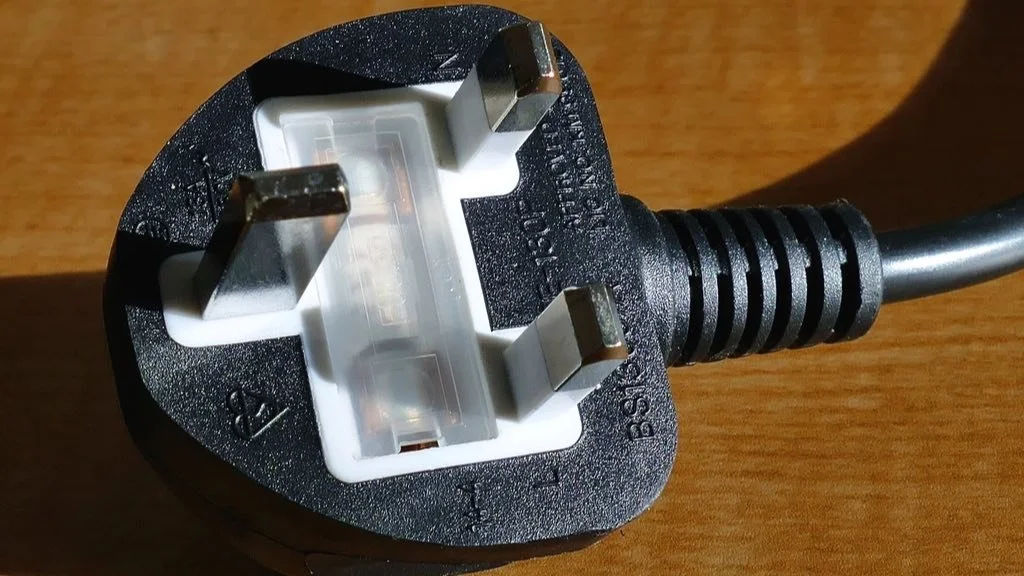
Portable appliances. User checks before use — damage to the cable or plug, taped joints, a cable grip not holding the sheath, cracked casing, signs of overheating. HSE suggests formal visual inspection of earthed Class I equipment such as kettles every six months to a year. Suggested starting points, not legal requirements.
The annual checks
Gas safety check. Every 12 months, by a Gas Safe registered engineer, with the record kept.
Fire risk assessment review. The Order does not specify how often the assessment must be reviewed. It requires regular review, and review when the assessment may no longer be valid or there has been a significant change. GOV.UK guidance says that for small and simple premises "an annual review is recognised as good practice". Treat the anniversary as a diary prompt, not a legal deadline.
Extinguisher basic service. Annually, by a competent person, under BS 5306-3. LACORS also recommends a simple multi-purpose extinguisher on each floor of the common parts.
Emergency lighting duration test. Annually, for the full rated duration — usually three hours — by a competent person, with the result recorded. LACORS describes an annual discharge test as adequate for average-risk premises, with the full BS 5266 regime for large or complex HMOs.
Fire alarm service. Grade A systems should be inspected and serviced at periods not exceeding six months. Table 3 sets a 12-month service for Grade D only in sheltered housing and telecare-linked systems, and none otherwise; the manufacturer's instructions may add one. LACORS recommends that all detectors are tested at least once a year to confirm they respond to smoke.
Alarm checks at a new tenancy. Not annual, but it belongs on the calendar: test on the day the tenancy begins, and act on tenant reports.
Portable appliance testing. There is no legal annual requirement. HSE calls the annual test of low-risk equipment a myth, and says the Regulations do not make testing a legal requirement or require it annually. Its suggested starting interval for earthed Class I equipment is a combined test every one to two years. LACORS says landlord-supplied appliances should be checked at the start of each tenancy, with regular checks good practice thereafter but no legal requirement unless employees use them. In an HMO the licence condition to keep appliances safe is the legal hook; the interval is a risk decision. If you let property, the essential guide to PAT testing for landlords covers the tenancy side, and our PAT testing service sets intervals from the equipment and its use rather than a default annual cycle.
The five-yearly checks
EICR. At least every five years, and before a new tenancy begins. Diary the remedial window at the same time: 28 days from the inspection date, or sooner if the report specifies.
Licence renewal. A licence lasts no more than five years, so apply well before expiry.
Extinguisher extended service. Water-based and powder extinguishers need an extended service every five years; CO2 extinguishers have a 10-year overhaul instead.
Building the calendar around your building
The calendar changes with licensing, system grade and premises type.
Licensed or unlicensed. An HMO is defined by the standard, self-contained flat or converted building tests in the Housing Act 2004. Mandatory licensing applies to an HMO occupied by five or more persons living in two or more separate households, meeting one of those tests. Councils can also designate areas for additional licensing, bringing smaller HMOs into the licensing regime. Licensing brings mandatory conditions — annual gas certificate, safe appliances, smoke and CO alarms — alongside the Management Regulations, which apply to every HMO in England except section 257 converted blocks. Our HMO compliance service covers the licence-condition checks alongside the fire safety work.
System grade and height. A five- or six-storey HMO will usually have Grade A detection in the common parts and emergency lighting, which means weekly testing and six-monthly servicing; a two-storey shared house may have Grade D alarms tested monthly. The LACORS tables set out recommended grades by premises type and height.
Premises type. Bedsit HMOs, shared houses and converted blocks have different detection and escape provisions. A single-family let is not an HMO: LACORS notes that in premises occupied by single households only the housing health and safety rating system applies. Do not apply HMO rules to every rented home.
This article covers England. HMO licensing and fire safety are devolved, so check the Welsh, Scottish and Northern Irish regimes separately.
What to do this week
- Write down the dates you already have: gas certificate, EICR and its remedial deadline, licence expiry, last alarm checks.
- Read the fire risk assessment and check it names who tests what, how often, and where the result is recorded.
- Put the weekly and monthly tests — matched to the alarm grade — in a named person's diary, with a logbook entry for each.
- Book the annual items — gas, extinguisher service, emergency lighting duration test and alarm service — as one visit where possible.
- Decide the PAT interval from the equipment and its use, record the decision, and stop treating "annual" as the default.
- Walk the escape route once this month, in the dark, and write down what you find.
Get the calendar checked
If you would rather someone set the dates with you, PatTest.com provides PAT testing, fire alarm servicing, fire extinguisher servicing, emergency lighting testing and fire risk assessments for HMOs, landlords and premises managers across Northamptonshire, Leicestershire, Warwickshire, Bedfordshire, Buckinghamshire and the wider Midlands. We start with the checks your licence and fire risk assessment require, and schedule the rest. Book a visit or check our prices, and we will tell you which dates are law and which are guidance. Our HMO compliance and fire risk assessment work covers the whole calendar.
