The short answer
Three changes landed on rented homes in 2026, and all three touch fire and electrical safety. The Housing Health and Safety Rating System — the scoring tool councils use to grade hazards in a home — was rebuilt and came into force on 23 June 2026, with new statutory guidance and a broader fire hazard. Councils gained a new power to fine private landlords up to £7,000 for leaving the most serious hazards unremedied. And from 30 November 2026, Awaab's Law extends to fire and explosions and to electrical hazards — in social housing, for now.
If you are a private landlord, the first two already apply to you. The third does not yet, but the consultation on extending it to private tenancies closes on 18 December 2026.
What changed in the HHSRS
The HHSRS is not a checklist you can pass or fail. It is a risk assessment: a council inspector scores the likelihood of harm and the severity of the outcome, then decides whether the hazard is serious enough to require action. The most dangerous hazards are classed as category 1, where the council has a legal duty to act; category 2 hazards are discretionary.
In 2026 the system was rebuilt for the first time since it was introduced in 2006. The government's own summary is blunt about the scale: a review by academics and technical experts, over 1,000 stakeholders involved, and a new assessment and scoring process.
The changes that matter to a landlord:
- Fewer hazard categories. The number of prescribed hazards fell from 29 to 21, with statistically similar hazards merged.
- Fire and explosions is now a single combined hazard. It covers exposure to uncontrolled fire and associated smoke and fumes, and the risk of an explosion.
- New statutory guidance. The operating guidance, enforcement guidance, case studies, landlord and agent guide, and tenant guide were all published or updated between June and September 2026.
- New baseline indicators. These set out the standard a home is expected to meet for each hazard, and they are now part of the framework.
The practical effect is that the fire hazard is assessed more broadly than before, and the guidance an inspector works from is more specific. A home that scraped through under the old wording may not do so under the new one.
The new £7,000 penalty
Alongside the rebuilt HHSRS, councils gained a new enforcement tool. The Renters' Rights Act 2025 introduced a power for local authorities to issue financial penalties of up to £7,000 to private landlords who have failed to take reasonably practicable steps to keep their properties free of category 1 hazards. The penalty sits alongside the existing tools — an improvement notice, for example — rather than replacing them, and it came into force with the updated HHSRS in June 2026.
The context explains why. Around 11 million people rent privately in England, in 4.7 million households. In 2024, 22% of privately rented homes failed to meet the Decent Homes Standard, against 10% of socially rented homes. And in 2023, 10% of private rented homes contained a hazard at the most dangerous category 1 level.
That last figure is the one to sit with. It means roughly one in ten private rented homes had something serious enough that the council had a duty to act.
Awaab's Law: fire and electrical hazards from 30 November
Awaab's Law is the set of repair timeframes introduced after two-year-old Awaab Ishak died in 2020 from prolonged exposure to mould. It came into force for social housing on 27 October 2025, covering all emergency hazards and damp and mould hazards that present a significant risk of harm.
Phase 2 extends it from 30 November 2026 to seven more hazard types where they present a significant risk of harm: excess cold, excess heat, falls, structural collapse, fire and explosions, electrical hazards, and domestic hygiene.
The timeframes are fixed and short:
- Emergency hazards — investigated and made safe within 24 hours of the landlord becoming aware of them.
- Significant hazards — investigated within 10 working days, with a written summary to the tenant within 3 working days of the investigation concluding.
- Relevant safety work — completed within 5 working days of the investigation concluding.
- Supplementary preventative work — begun within 5 working days, or as soon as reasonably practicable and within 12 weeks, to stop the hazard recurring.
Two boundaries are worth knowing, because they are where people assume the law covers more than it does. Awaab's Law does not apply to fire hazards in communal areas already covered by the Regulatory Reform (Fire Safety) Order 2005 — damaged fire doors, debris obstructing the means of escape, deficiencies in compartmentation. Those stay with the building's responsible person. And cladding remediation is excluded, because it is a longer-term project rather than an emergency repair; it remains a duty under the Fire Safety Order and, for higher-risk buildings, Part 4 of the Building Safety Act 2022.
So Awaab's Law covers the fire and electrical hazards inside the home. The communal parts are a separate regime with a separate responsible person.
What this means if you are a private landlord
Awaab's Law does not apply to private tenancies yet. The government has consulted on extending it, using powers in the Renters' Rights Act 2025, and the consultation runs from 9 October to 18 December 2026. It covers private rented tenancies and accommodation occupied under licence — supported housing, temporary accommodation and care leaver accommodation.
The proposal is to apply Awaab's Law to all HHSRS hazards except overcrowding, on the same basis as social housing. That would bring fire and electrical hazards inside private tenancies into a fixed-timeframe regime, not just a council enforcement regime.
Until then, your obligations are unchanged in substance but sharper in practice. A category 1 fire or electrical hazard is something a council must act on, and now it can fine you up to £7,000 for not dealing with it. The rebuilt HHSRS gives the inspector a broader fire hazard and more specific baseline indicators to measure your property against.
The checks that matter now
The fire and electrical hazards in the HHSRS are not abstract. They map onto work you can commission and records you can keep.
A fire risk assessment is the document an inspector will ask for first, and it is the evidence that you have thought about the building rather than just the appliances. For a rented house or flat, it should reflect the actual layout, the occupancy and the escape route. Our fire risk assessment service covers rented homes and HMOs.
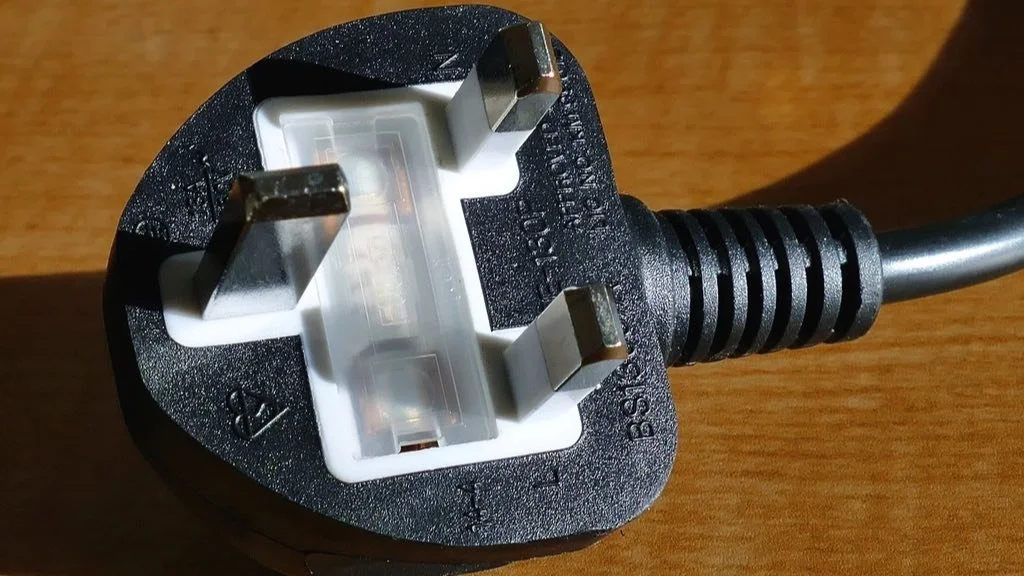
Electrical hazards split into two parts, and landlords routinely confuse them. The fixed installation — the wiring, the consumer unit, the intake — is covered by an electrical installation condition report (EICR). The appliances are covered by PAT testing, or portable appliance testing, which checks the plug, the lead and the appliance itself. A PAT test does not tell you anything about the fixed wiring, and an EICR does not tell you anything about the kettle.
Fire detection and escape are assessed together under the fire hazard. That means working smoke and heat detection appropriate to the layout, and a means of escape that actually works. Fire alarm servicing keeps the system tested and recorded; the weekly call-point test is the responsible person's job between services.
Escape routes depend on things that are easy to let drift. Emergency lighting testing and fire extinguisher servicing are both routine maintenance items that become enforcement items when they lapse.
If you let an HMO, the bar is higher and the paperwork is heavier. Our HMO compliance page sets out what a council expects to see, and the practical answer is usually a single visit that covers all of it rather than four separate contractors.
What to do this week
- Check whether your last fire risk assessment still describes the building as it is now. If the layout, occupancy or escape strategy has changed, it needs revisiting.
- Confirm your EICR is in date and that any coded defects have been remedied, not just noted.
- Check the PAT testing record for appliances you provide — white goods, heaters, kettles, chargers left in the property.
- Test a fire alarm call point and write it in the logbook.
- Diarise the emergency lighting and extinguisher service dates so they do not quietly expire.
- If you are a private landlord, read the consultation before 18 December 2026. The timeframes being proposed for private tenancies are the ones social landlords are getting on 30 November, and they are short.
PatTest.com provides PAT testing, fire alarm servicing, fire extinguisher servicing, emergency lighting testing and fire risk assessments across Northamptonshire, Leicestershire, Warwickshire, Bedfordshire, Buckinghamshire and the wider Midlands. If this year's changes have left you unsure whether your records are current, book a visit or check our prices.