
The short answer
Class 1 and Class 2 appliances are built to protect against electric shock in two different ways, and that difference decides how they are tested. A Class 1 appliance relies on a protective earth connection: its exposed metalwork is earthed, and its safety depends on that earth path staying intact. A Class 2 appliance uses double or reinforced insulation and does not rely on an earth connection at all.
So the tests differ. Class 1 equipment gets an earth continuity test, then insulation resistance or a protective conductor current measurement. Class 2 equipment gets no earth continuity test: the insulation resistance test is made to accessible conductive parts, or touch current is measured instead. Testing either class as the other is one of the most common ways to pass an unsafe appliance or fail a safe one.
What Class 1 and Class 2 actually mean
The formal terms are Class I and Class II; "Class 1" and "Class 2" are the same thing in everyday use. HSE's guidance defines Class I as equipment that relies on its metallic, exposed conductive parts being effectively earthed. If that earth connection is lost, the exterior of the equipment can become live, with a potentially fatal result.
Class II equipment is constructed with high-integrity insulation and does not have, or need, an earth connection to maintain safety. It is marked with the double-square symbol. HSE's rule for anyone unsure is simple: if you cannot see the symbol, assume the equipment is Class I. A plastic casing does not make an appliance Class II — plenty of Class I appliances have plastic cases and earthed metalwork inside. Phone chargers are a common example of the opposite: most are Class II, which is one reason a damaged charger is a particular risk.
There is also a newer classification that matters in practice: Class II FE, meaning Class II with a functional earth. It is common on IT equipment. The earth is there for functional purposes, not shock protection, and the equipment is treated as Class II for safety testing. A functional earth is not a protective earth, and a tester who mistakes one for the other can fail a perfectly safe appliance.
Class III is different again: it is supplied from a separated extra-low voltage source, so the appliance itself is inspected visually, while its charger or supply unit is inspected and tested in its own right.
Why the difference matters
The difference is not academic. It changes what a test actually proves.
For Class 1 equipment, the earth path is the safety measure. The tester has to verify that the protective conductor is continuous from the plug's earth pin to every exposed metal part that should be earthed. If that path is broken — a loose earth wire in the flex, a disconnected terminal in the plug — the appliance can look fine and still be dangerous. An insulation resistance test alone will not find it. Our PAT testing service starts by identifying what each appliance is and which tests it actually needs.
For Class 2 equipment, there is no earth path to verify. Safety depends on the insulation barrier staying intact: the basic insulation around live parts plus the supplementary insulation around it. The test therefore checks the resistance between the live conductors and the accessible surfaces a person could touch. A cracked case, a missing screw or a damaged cord grip can breach that barrier without any electrical fault showing up in normal use.
That is why misclassification cuts both ways. Test a Class 2 appliance as Class 1 and the earth continuity test has nothing meaningful to measure — it may fail a safe appliance or produce a reading that gets ignored. Test a Class 1 appliance as Class 2 and the earth bond is skipped altogether, so a broken earth goes undetected. Either mistake weakens the evidence that the appliance is safe.
It also affects the maintenance plan. HSE's suggested initial frequencies treat the classes differently: hand-held Class II equipment, such as some floor cleaners and kitchen equipment, needs user checks and a formal visual inspection every six months to a year, but no combined test; earthed Class I equipment such as kettles gets a combined test every one to two years. Those are suggested starting points, not legal requirements.
The IET Code of Practice's 5th edition removed its frequency table altogether, leaving intervals to the dutyholder's risk assessment. The class is one of the factors in that assessment, because Class I equipment depends on the installation's earth while Class II does not.
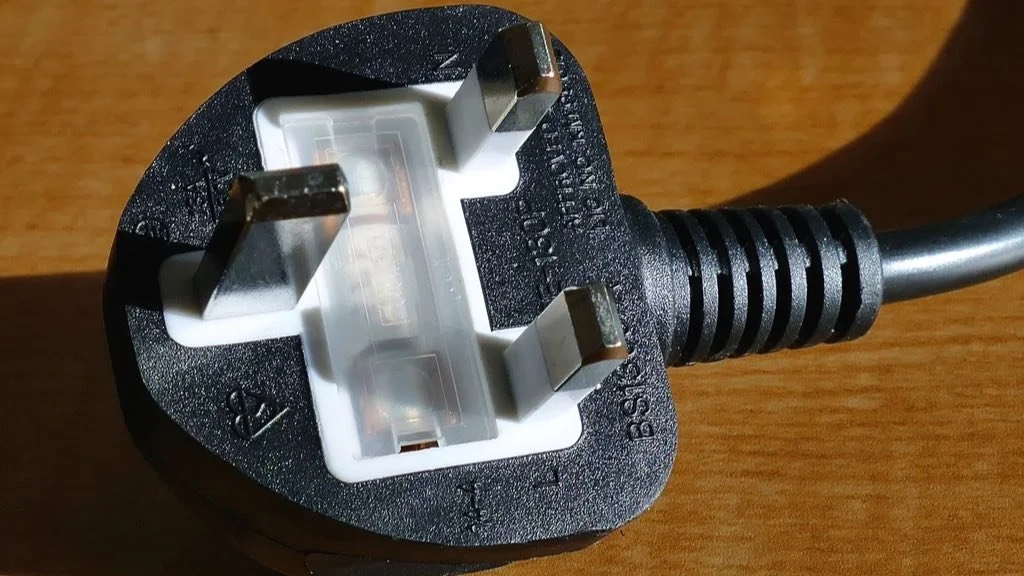
How the test differs
The exact sequence depends on the tester's instrument and the current edition of the IET Code of Practice, but the structure is consistent.
Class 1 equipment: a formal visual inspection, then earth continuity, then insulation resistance or a protective conductor current measurement, then a functional check. The earth continuity limit is (0.1 + R) Ω, where R is the resistance of the protective conductor in the supply cord.
Insulation resistance is measured at 500 V DC, with a minimum of 1 MΩ for Class 1 equipment. The 5th edition of the Code sets a protective conductor current limit of 5 mA, while BS EN 50699 sets 3.5 mA for general equipment.
The 5th edition favours a low test current for earth continuity; a high-current 25 A test can damage some equipment and is not always needed.
Class 2 equipment: a formal visual inspection, then insulation resistance between the live conductors and accessible conductive parts, then a touch current measurement, then a functional check. The insulation resistance minimum is 2 MΩ.
The probe is placed on any metal parts or suspect joints in the enclosure where conductive material may have accumulated, and more than one test may be needed. There is no earth continuity test.
The 5th edition sets a touch current limit of 5 mA, raised from 0.25 mA in the 4th edition; BS EN 50699 sets 0.5 mA.
Two practical points. First, the insulation test should come before any test that applies mains power, because it can detect a dangerous insulation failure before the appliance is energised. Second, 500 V DC is not always appropriate: it can damage some IT equipment or operate surge protective components, so 250 V DC or a substitute leakage measurement may be used instead. Older test instruments may still be set to the 4th edition limits, which is why a tester needs to interpret results rather than trust a pass/fail display.
Cables follow the same logic. A three-core appliance cable is tested as Class I equipment, with earth continuity, insulation resistance and a polarity check; a two-core cable is tested as Class II, with insulation resistance and a polarity check. Extension leads are tested as Class I. If you want the wider picture of what a combined inspection and test covers, what PAT testing actually tests walks through it.
The mistakes that matter on site
- Assuming plastic means Class 2. Look for the double-square symbol. If it is absent, treat the appliance as Class 1.
- Earth-bond testing a Class 2 appliance. There is no protective earth to test; the result is meaningless or misleading.
- Skipping the earth bond on a Class 1 appliance because its case is plastic. The earth connection may still be protecting internal metalwork or a metal chassis.
- Confusing a functional earth with a protective earth. Class II FE equipment is tested as Class II.
- Using superseded limits. The 4th edition's 0.25 mA touch current limit was raised to 5 mA in the 5th edition, and instruments may not have been updated.
- Recording only "PAT tested". A useful record shows the construction class, the tests performed and the result, so the next person can see what was actually proved.
Get the class right, and the test follows
If you are not sure what you have, we can identify the construction class of each appliance and build the test schedule around it. PatTest.com provides PAT testing for landlords, duty holders and premises managers across the UK. Book a visit or check our prices, and we will tell you plainly which tests your equipment actually needs.
